
Passing Time, Post 26-01
Updated: Jan 9
Liveaboard Series Part 3 of 3
This week covers how we spend a typical day on the boat. How time is spent varies greatly between cruising and non-cruising days so those two scenarios are described separately from each other.
Moving Days
Departures
Travel days that require an early departure have us hopping out of bed about an hour before sunrise and drinking coffee while getting everything prepared to leave by first light. Some travel days allow us to take our time in the mornings before starting to prepare the boat for departure.
Underway
Once underway we take turns at the helm. We’ve learned that motoring down the ICW can be mentally tiresome after just an hour at the helm, so we now do one hour on, one hour off. Sailing in the open water is much more relaxing and we can adjust our schedule to take on longer shifts.
Multiday trips require sailing through the night with someone at the helm at all times. The shift schedule that works best for us is four three-hour shifts covering the night, followed by three four-hour shifts during the day.
What you choose to do on your off shift depends on conditions. Normally the off-shift person can do what they please whether it is sleeping in the cabin, tackling small chores, reading, or just hanging out with the helmsman in the cockpit. However, when weather conditions are too sporty, or when cruising through areas that need a second set of eyes, the off-shift person needs to stay close and be available to the helmsman. Also, it is typical for the off-shift person to do any food preparation or fetching of drinks.
On and off shift (guess which is which)
Lay Days
The majority of days, Utopia sits still either at anchor, on a mooring ball or at a marina. After coffee and breakfast in the cockpit we begin to take on the day. A typical day may involve the following:
Boat projects

Much of our time is spent addressing issues or making improvements to the boat. Instead of seeing these as chores, think of boat projects as a hobby. It seems that a lot of boat projects are little mysteries to solve, or a puzzle to put together, keeping our brains from atrophying. Admittedly there are some projects (like changing out the pump on the head) that are going to be the least pleasant of hobbies.
Exercising
Our primary source of exercise is from walking, whether it is while completing errands, exploring an area, or taking a walk for exercise. We each have our own short set of stretch and strength exercises that we do each morning and evening (we should be doing more than this). We always envisioned swimming to be a large part of our exercise but as of yet this has not been the case. Most of the water has been either too cold, too gross, or filled with too many jellyfish. I keep hoping this will change one day. Occasionally we will get the opportunity to ride bikes for exercise.
Errands & Other Tasks
As mentioned before, we tend to walk to stores. This adds time to completing the errand, like deploying the dinghy to take to shore, then walking a mile or two to reach a laundromat or grocery store, but time is a resource that we have a fair amount of.
Extra-Curricular Activities
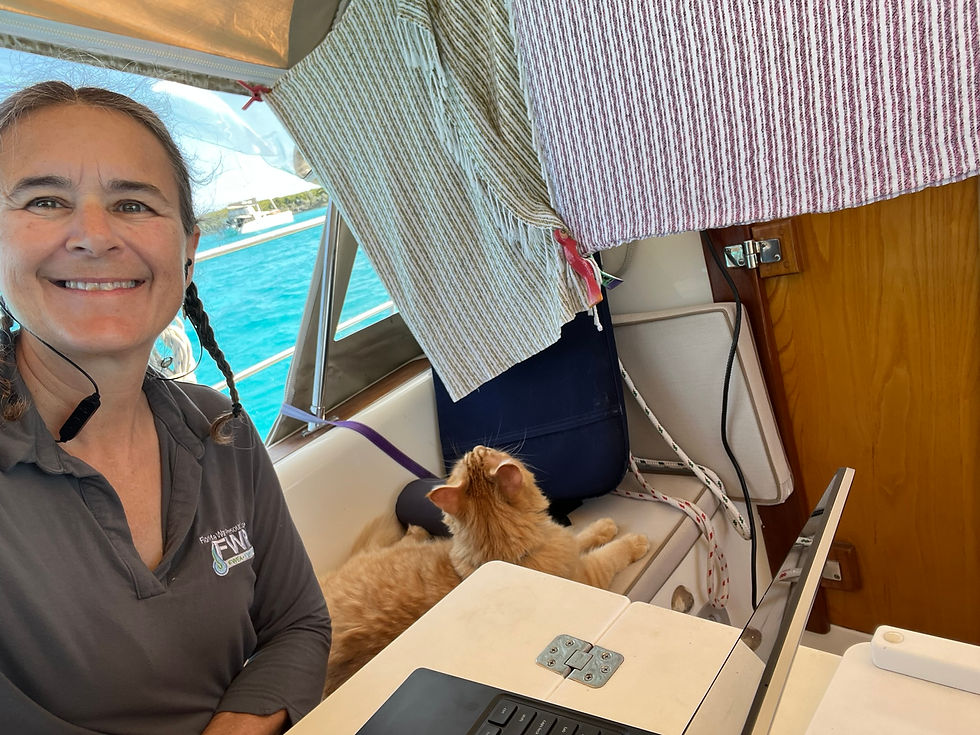
In general, we try to wrap up our projects between 3:00 and 4:00 each afternoon to allow some lounging time before dinner. Once we clean the boat and ourselves up, the rest of the afternoon is spent doing what we consider to be rather typical lounging activities: reading, writing, screen time, planning trips, language learning, talking to family and friends, and so on.
Somedays we schedule some off the boat activities doing things such as:
Site seeing & attending local events
Hiking & dinghy explorations
Visiting or entertaining other boaters
Renting bicycles and golf carts
Bigger explorations could involve taking a road trip, backpacking, or some sort of mini vacation away from Utopia.
Time alone can be accomplished by one of us leaving the boat for solo trip out and about. Or, it can be just simply opting for quiet time on the boat, each doing their own activity.
Guests on Board
There’s an old saying that goes: cruisers and guests can pick either a date or a place to meet up, but not both.

Our frequent moves and changing plans due to weather make scheduling visits from non-cruisers to be tricky. While a distance that takes us a day to sail could be reached in an hour by car, guests might simply drive to meet us at a new location if needed.
Guests have the option of visiting during the day or staying onboard overnight. If guests are staying somewhere on land, and if we are not at a marina, we can bring you back to Utopia by dinghy.
A few people have worked with our flexible schedule and have been able to spend an afternoon aboard Utopia. These visits occurred when we planned a longer stops in areas and we began coordinating with our guests a few weeks in advance of our arrival.
Having other cruisers as guests is usually spontaneous. Guests typically bring their own drinks, and sometimes a snack to share if requested by the host. People dinghy to the host boat and the host assists with dinghy lines and unloading items.
Pros & Cons of Liveaboard Cruising
Wrapping up this Liveaboard Series, here are some observations from our two years of liveaboard cruising. First, the more challenging aspects of this lifestyle:
Shopping – Getting needed boat parts or buying basic items from food to clothes was extra challenging during our first six months of cruising. Over time we have become more resourceful and learned to stretch out the life of an object or cobble it together to last longer or figure out how to do without.
Healthcare – Managing health issues takes extra coordination and preparation.
Laundry – Laundromat visits require planning and sometimes requires really stretching out your clothing usage or washing smaller loads by hand and drying them out on the lifelines which may be salt encrusted.
Water and power consumption – Close monitoring, creating new conservation habits, and selecting good locations to cruise can ease the burden of living with limited water and power.
Sailing during bad weather – We try to avoid sailing in really bad weather, but it does occur occasionally. Talking through sail plans and emergency options can help ease the mind. Also, strong storms while at anchor (as well as at marinas to some degree) can lead to sleepless nights.
Now for some of the more positive aspects:
Flexibility in schedule – After many years of living with rather tight schedules, this lifestyle that has open schedules and requires a lot of flexibility is a welcome change of pace.
Meeting people – Chatting with random people has turned out to be even more enjoyable than I had imagined. A lot of this can be attributed to the pace of the lifestyle and not always feeling rushed to move along.
Simple living – This lifestyle does not need to pull you into different directions allowing you to focus more on what’s around you and making time feel like it slows down. Most of the time it is peaceful to live close to nature with unique views in each area we visit. Plus, this lifestyle allows us to visit some off the beaten path locations.
Having my home travel with me – There is just something comforting about returning to home at the end of a day.
Post 26-01


Comments